
The Sixth Sense of Luxury: Why Paris Has Palace Hotels
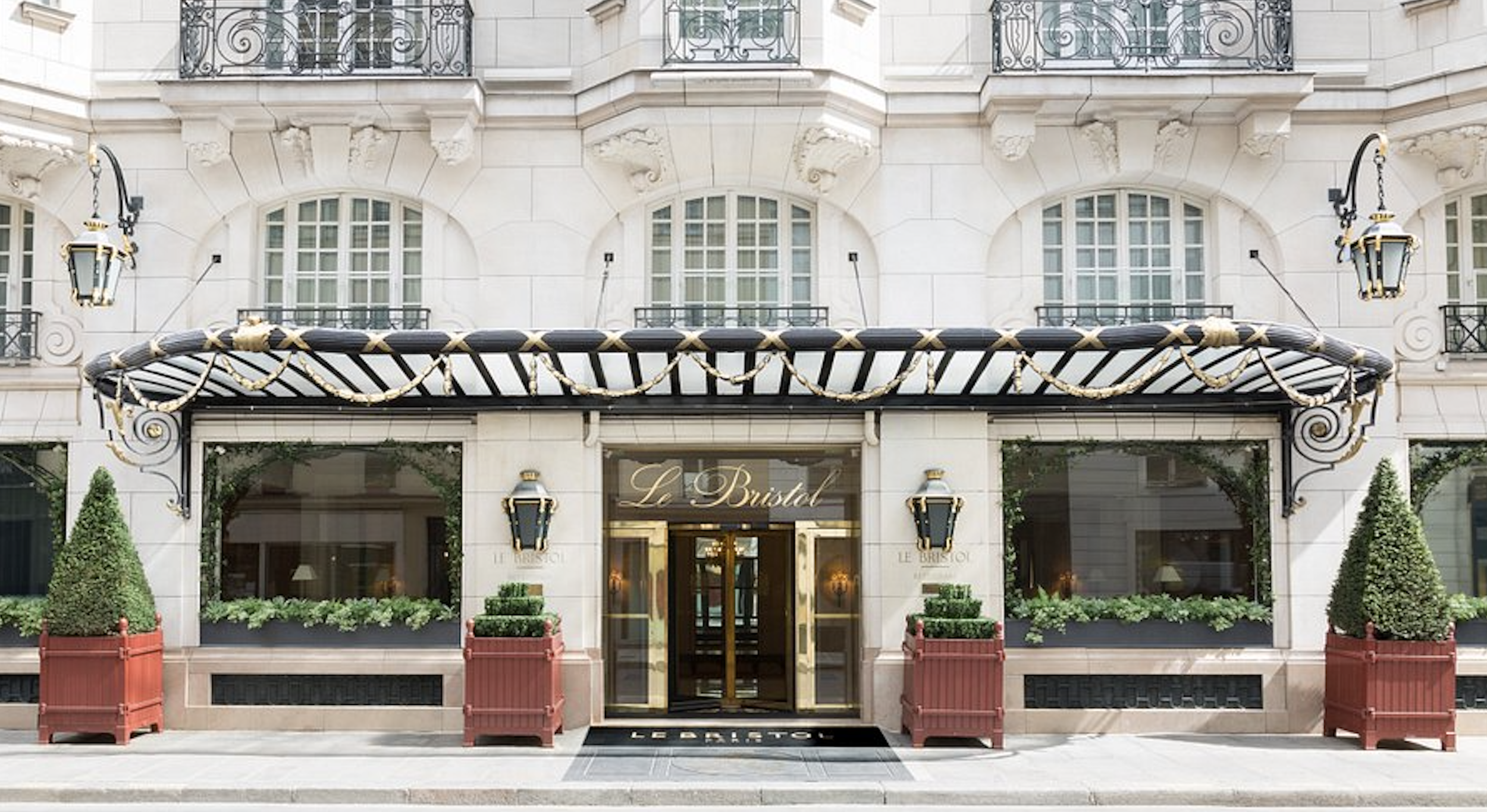
Five Stars Can Tell Us What a Hotel Provides. Paris’s Palace Distinction Tries to Capture Something More Elusive: How a Hotel Makes Us Feel.
Put two five-star hotels within a few streets of one another in Mayfair. Both may have marble bathrooms, a concierge desk, room service, a spa and several impressive suites, yet the experience can be entirely different.
At one, everything works absolutely fine. At the other, you have the curious sensation that the entire operation has quietly rearranged itself around you. Your name is remembered without being overused. A preference is noticed once and acted upon thereafter. Problems disappear before they become inconveniences. One is a very good luxury hotel; the other feels like a world of its own.
The stars above the door are the same, but the experience is not. So it got us thinking, what does five-star actually mean?
It is tempting to say that star ratings measure facilities rather than service. The truth is slightly more nuanced. England’s current VisitEngland standards explicitly say that assessment is “not just a box-ticking exercise”. Hotels receive overnight mystery visits covering the journey from booking to check-out, and hospitality, service, food, bedrooms, bathrooms and cleanliness are all assessed.
The published requirements for five stars are substantial. Depending on the hotel and its market, they include 24-hour reception, staff taking charge of luggage from the moment a guest arrives, a full concierge service, a restaurant serving all meals seven days a week, 24-hour room service, a permanent luxury suite, generously sized bedrooms, 24-hour laundry, an impressive lobby or bespoke check-in process and highly trained, proactive staff.
These are useful assurances. They tell us that a hotel has the infrastructure and breadth of service expected at the luxury level. But clearly they don't tell us everything.
A checklist can confirm that a concierge exists. It cannot easily measure whether that concierge understands when to step forward and when to remain invisible. It can verify the presence of room service, but not whether breakfast arrives precisely as promised, with yesterday’s preference remembered and no unnecessary telephone call. It can count suites, lifts and restaurants; it is less able to capture judgement, warmth, confidence, memory or atmosphere.
In short, five stars establish a hotel’s vocabulary, but they don't necessarily tell us how fluently it speaks.
Palace: Not a Sixth Star
France recognised this problem when it created the official Palace distinction in 2010. A Palace is not a self-proclaimed six- or seven-star hotel. It is a state-regulated distinction available only to establishments that are already classified five-star.
As of the 2026 selection, France has 33 officially designated Palaces, 13 of them in Paris. The title lasts for three years rather than indefinitely. Candidates undergo an eligibility review, visits by members of the Palace Commission, a formal hearing and, finally, a decision by the minister responsible for tourism.
There are hard requirements before the more subjective assessment even begins. A new hotel must generally have operated for at least 24 months; bedrooms must normally measure at least 26 square metres; and reinforced five-star criteria bring facilities such as a spa, fitness space, valet service and a meaningful proportion of suites into play.
Then comes the really interesting part. The commission considers 12 broader areas: exceptional location and architecture; history and heritage; aesthetics and generosity of space; gastronomy (of course, this is France!); uniqueness; the commitment and training of the team; responsible practices; technology; and, crucially, the personalisation, speed, precision and continuity of service. One service indicator for Parisian candidates examines staffing intensity at a level of at least 2.5 employees per room key, adjusted for occupancy. The criteria also consider genuinely continuous service, including concierge, valet and luggage assistance, in-room service and dining around the clock.
The founding report used a phrase that no points system could improve upon. Beyond the quality, service and equipment required of five stars, it said, lies “the soul of the hotel”: its history, personality and the memories held within its walls.
That may be the real purpose of the Palace distinction. Atout France describes it as “neither a simple additional level of prestige nor a marketing label”. It is an attempt to recognise hotels in which luxury has become a complete culture rather than a collection of amenities.
Paris’s Palace hotels include historic grand dames such as Le Meurice, the Hôtel de Crillon, Le Bristol and the Plaza Athénée. But the list also embraces newer or more contemporary expressions of luxury, including Cheval Blanc Paris, Bulgari Hotel Paris and La Réserve.
That range matters. A Palace is not simply a hotel with chandeliers, gilded ceilings and a famous staircase. Nor does grandeur alone produce great hospitality. A spectacular building can still feel impersonal; a smaller or more modern hotel can feel completely transporting.
The common quality is singularity. The architecture, interiors, food, rituals and service all express the same point of view. Nothing feels generic or borrowed from a corporate luxury template. The guest senses not only money being spent, but thought being applied.
And the greatest luxury is often invisible. It is the room that is prepared around the guest’s habits rather than housekeeping’s routine; the doorman who recognises the returning visitor after a year; the reservation that materialises when the city appears full; the member of staff empowered to solve something immediately rather than refer it upwards.
So Back to London and We Ask Ourselves What is the Equivalent of a Palace in London?
Well, the UK has no directly comparable state-regulated category above five stars. We have five-star hotels, followed by a more informal top tier that travellers, agents and hoteliers recognise instinctively.
Claridge’s is an obvious example, not simply because of its physical grandeur, but because of its rituals, institutional memory, continuity of service and unmistakable personality. Yet a London hotel does not need a ballroom, a century of history or an art-deco façade to belong in this upper tier. A contemporary, design-led property can feel equally special if its identity is compelling and its service is intelligent, generous and consistent.
British schemes have, in effect, begun adding extra layers to the stars. AA Red Stars identify hotels that stand out as the best within their rating, regardless of size or style, while VisitEngland’s Gold and Silver awards recognise establishments that outperform their category. The Michelin Keys similarly focus on character, design, service and the memorability of the stay.
The existence of all these additional distinctions makes the point: five stars alone no longer tell the whole story.
Are Star Ratings an Anachronism?
Stars remain a valuable minimum guarantee, they are not useless - they are just incomplete. They help us understand what a hotel should be capable of providing. But at the highest level, they should be treated as an entry qualification rather than a final verdict.
The more revealing questions are different. Does the hotel have a distinctive sense of place? Is the service anticipatory without becoming intrusive? Are its people empowered to deal with the unexpected? Does it feel equally accomplished at two in the morning and two in the afternoon? Does the guest feel recognised rather than processed?
Paris has not invented a sixth star. It has recognised that, at the very top end, luxury is not a facility - it is a feeling, made consistent and repeatable by people.